Bunions and hammertoes
Bunions and hammertoes change the shape of the foot and can make shoes painful. Simple changes help many people, and surgery can correct the shape when it is needed.
What are bunions and hammertoes?
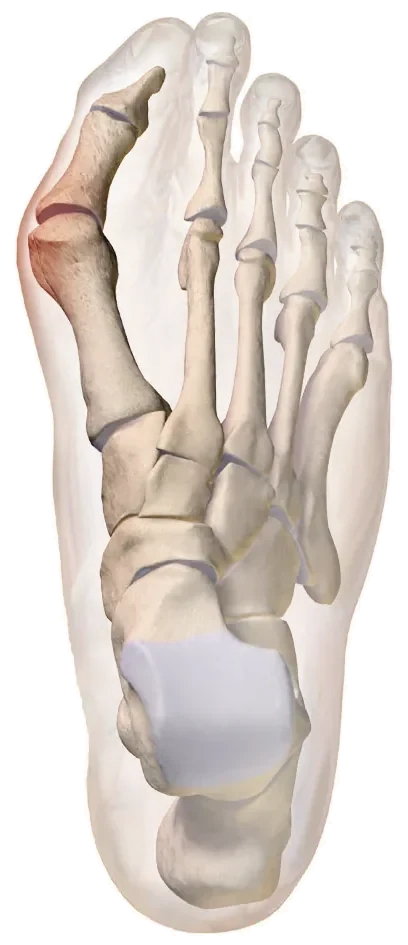

A bunion (hallux valgus) is a bump on the side of the big toe joint. It forms when the long bone behind the big toe (first metatarsal) drifts outward and the big toe leans toward the other toes. A smaller bump on the little toe side is called a tailor's bunion (bunionette).
A hammertoe is a toe that bends down at the middle joint and stays bent. It looks like a small hammer. The top of the bent joint can rub on shoes and form a painful corn.
Why do they happen?
- Foot shape you are born with, which often runs in families
- Flat feet or loose joints
- Tight, narrow, or pointed shoes, and high heels
- Arthritis
- Muscle imbalance in the toes
- A bunion can crowd the second toe and lead to a hammertoe
Signs to watch for
- A bump that is red, sore, or swollen
- Pain in the big toe joint or the ball of the foot
- Toes that overlap or bend and won't straighten
- Corns or calluses on the toes
- Trouble finding shoes that fit
Treatment without surgery
These steps don't change the shape of the foot, but they can ease pain:
- Shoes with a wide, deep toe box and a low heel
- Pads to protect the bump or corn
- Toe spacers, sleeves, or splints
- Shoe inserts (orthotics)
- Ice and medicine for pain, if safe for you
- Having a shoe stretched over the bump
When surgery makes sense
Surgery may be a good choice when:
- Pain keeps you from walking or daily activities
- You can't find shoes that fit, even after changes
- The bunion or toe is getting worse
- Rubbing leads to sores, which matters most if you have diabetes
Surgery for looks alone is not usually advised.
Bunion surgery in plain words
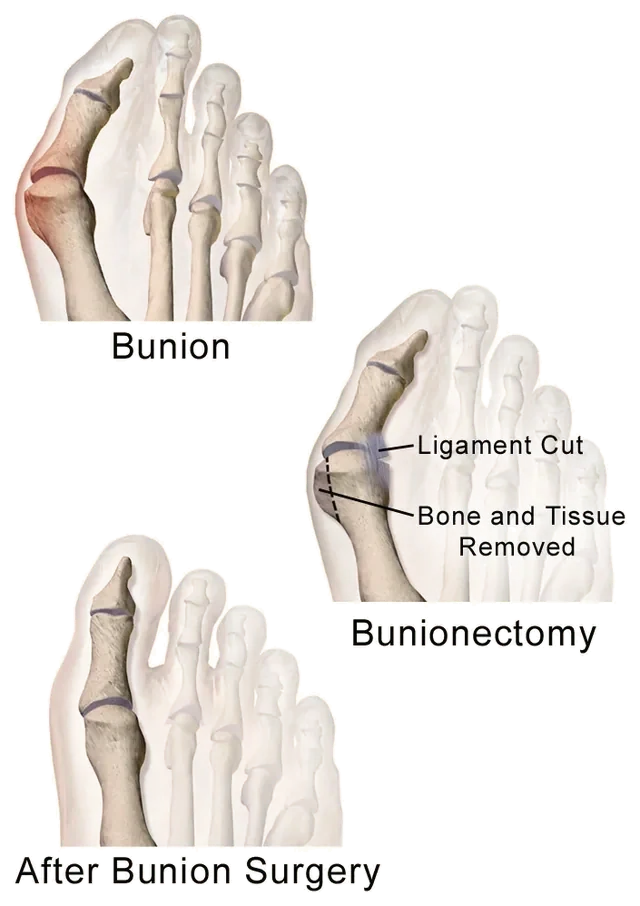

- Shifting the bone (osteotomy): for small to medium bunions, the bone near the big toe joint is cut and moved into a straighter position. Small screws or pins hold it while it heals.
- Lapidus procedure: for larger bunions, loose joints, or bunions that came back, the joint at the base of the first metatarsal (near the middle of the foot) is fused. This means two bones are joined so they heal as one. It corrects the bone from its base and can help lower the chance the bunion returns.
- Joint fusion of the big toe: for a bunion with severe arthritis in the big toe joint.
Hammertoe correction
If the toe is still flexible, releasing or moving a tendon may be enough. If the toe is stiff, a small piece of bone at the bent joint is removed so the toe can lie straight. Sometimes the joint is fused and held with a pin or small implant while it heals.
Recovery
Most people walk in a special shoe or boot after surgery. Some, often after a Lapidus procedure, need to keep weight off the foot for several weeks. Swelling can last for months. Getting back into regular shoes often takes about 6 to 12 weeks, depending on the surgery and how you heal.
How Dr. Nafal can help
Dr. Nafal is board qualified by the American Board of Foot and Ankle Surgery in Foot Surgery. He treats everyday foot problems like bunions and hammertoes, and he explains every option in plain words, including options that don't involve surgery.
Common questions
Will my bunion come back after surgery?
It can, but choosing the right surgery for your foot helps lower the risk. Dr. Nafal will explain why he recommends a certain approach.
Can I have both feet done at once?
Sometimes, but it makes getting around much harder. Many people choose one foot at a time.
Do toe spacers fix bunions?
They can ease rubbing and pain, but they do not change the bone position.
Talk to Dr. Nafal about your bunions or hammertoes
Offices in Canton and Troy. New patients welcome.