Diabetic foot exams & routine foot care
If you have diabetes, regular foot checks help find small problems early, before they turn into big ones.
Why foot checks matter
Diabetes can damage the nerves in your feet (neuropathy). You may not feel a blister, cut, or rock in your shoe. Diabetes can also lower blood flow to the feet (poor circulation), so wounds heal more slowly. A small sore that goes unnoticed can become a serious infection. Regular exams help catch these problems early.
What the exam checks
- Feeling in your feet, using a thin, soft nylon wire (monofilament) and other simple tests
- Pulses in your feet and ankles to check blood flow
- Skin for dryness, cracks, calluses, blisters, or sores
- Toenails for thickness, fungus, or ingrown edges
- Foot shape, such as bunions, hammertoes, or changes in the arch
- Your shoes, to see if they fit and protect your feet
Check your feet every day
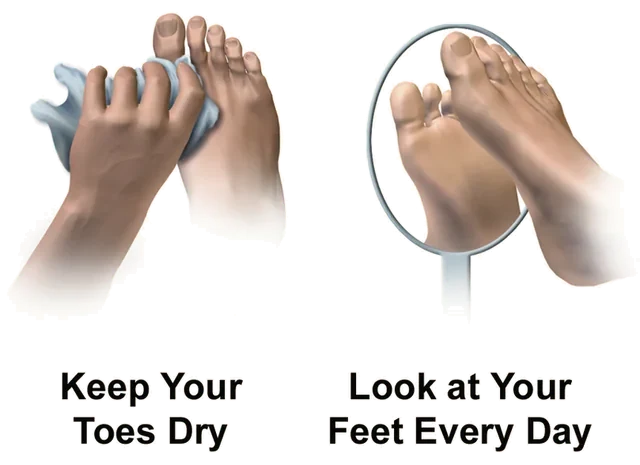

- Look at the tops, bottoms, heels, and between the toes
- Use a mirror, or ask a family member to help
- Wash in lukewarm water and dry well between the toes
- Use moisturizer on dry skin, but not between the toes
- Always wear shoes and socks, even at home
- Check inside your shoes before you put them on
Professional foot care
Dr. Nafal can safely trim thick nails and calluses so they do not cause sores. Please do not cut corns or calluses yourself or use medicated pads. He may also recommend diabetic shoes or inserts to protect your feet and take pressure off risky spots.
Medicare and many insurance plans may cover certain foot care for people with diabetes when certain criteria are met. We can check your plan for you.
Call right away if you notice a new sore or blister, redness that spreads, swelling, warmth, pus, a bad smell, or a change in the color or shape of your foot. If you have a fever with a foot wound, be seen the same day. For an emergency, call 911.
Common questions
How often should I have a diabetic foot exam?
Most people with diabetes should have a foot exam at least once a year. You may need visits more often if you have nerve damage, poor circulation, or a past foot wound.
My feet feel fine. Do I still need an exam?
Yes. Nerve damage can hide problems, so your feet may feel fine even when something is wrong.
Get help with your diabetic foot care
Offices in Canton and Troy. New patients welcome.