Limb salvage and diabetic foot wounds
A small sore on the foot can become serious when you have diabetes. Careful wound care, pressure relief, and teamwork with your other doctors can help save your foot and leg.
What are diabetic foot wounds?
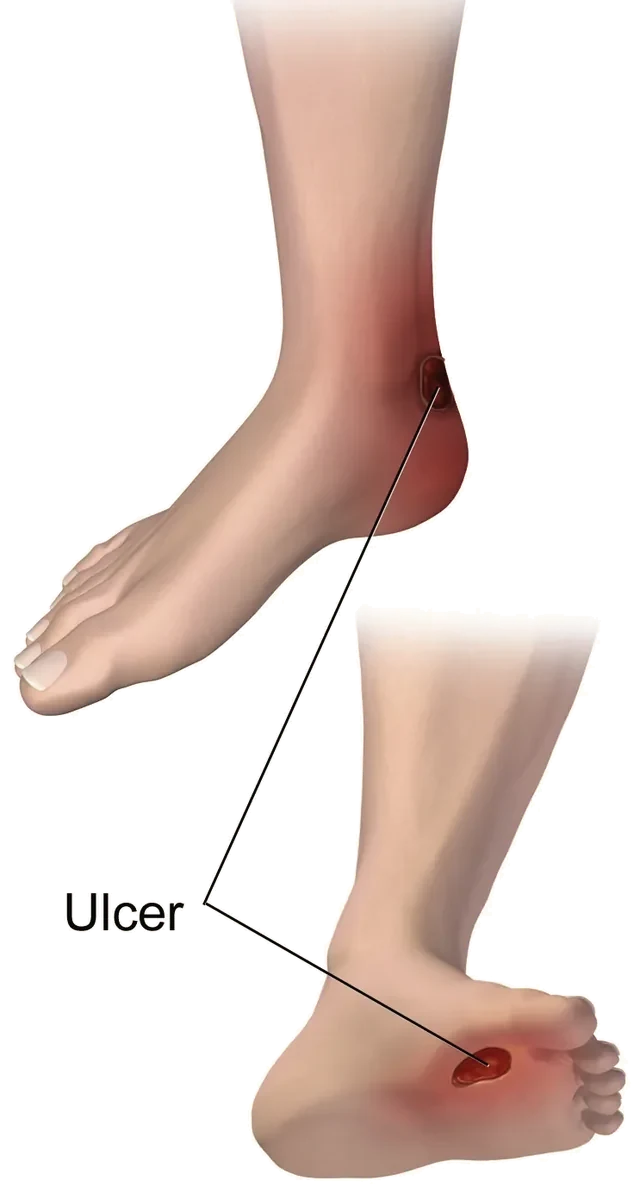

Diabetes can cause nerve damage, so you may not feel a blister, cut, or rubbing shoe. It can also slow blood flow to the feet. Together, these make it easier to get a wound and harder for it to heal.
- Ulcer: an open sore that does not heal the way a normal cut does. It often forms on the bottom of the foot or on the toes.
- Infection: germs get into the wound. It can spread into the skin and deeper tissue.
- Bone infection (osteomyelitis): the infection reaches the bone. This needs longer and more involved treatment.
Limb salvage means the care used to protect and save the foot and leg when wounds, infection, or deformity put them at risk.
Why wounds don't heal
- Pressure: walking on the sore keeps pushing on it. Bunions, hammertoes, or Charcot foot can create pressure spots.
- Circulation: poor blood flow means less oxygen and nutrients reach the wound.
- Blood sugar: high blood sugar slows healing and makes it harder to fight infection.
- Infection or dead tissue: these can stall healing until they are cleared.
Get help right away if… you have a foot wound with spreading redness, new swelling, pus, a bad smell, dark or black skin, or fever and chills. Call our office right away or go to the emergency room. If you have diabetes and a foot suddenly turns red, hot, and swollen, do the same. For a medical emergency, call 911.
How wounds are treated
Care is planned around your foot and your overall health. It often includes:
- Wound care: regular cleaning and dressing changes, with clear steps for care at home.
- Removing dead tissue (debridement): cleaning out unhealthy tissue so healthy tissue can grow. This is often done in the office.
- Taking pressure off (offloading): a special cast, boot, shoe, or padding so the wound is not stepped on.
- Treating infection: antibiotics by mouth or through a vein (IV), based on how serious it is. Some infections need a hospital stay.
Working as a team
Healing a diabetic wound often takes more than one doctor. Your care may include your primary care doctor, a diabetes specialist (endocrinologist) to help with blood sugar, and a blood vessel specialist (vascular surgeon) if blood flow is low.
When surgery helps
Surgery may be needed to drain an infection, remove infected bone, or correct a bone shape that keeps causing pressure. Sometimes an outside frame (external fixator) is used to hold bones steady while an infected or fragile area heals. In some cases, removing part of a toe or foot is the safest way to stop an infection and protect the rest of the leg. Dr. Nafal will explain why, and what other choices exist, before any decision.
Preventing new wounds
- Check your feet every day, including between the toes
- Wear shoes and socks that fit well, even at home
- Keep blood sugar in the range your doctor recommends
- Don't smoke
- Have regular foot exams
How Dr. Nafal can help
Limb salvage is one of Dr. Nafal's areas of focus. He is board qualified in Foot Surgery and in Reconstructive Rearfoot and Ankle Surgery, and he operates at Corewell Health Dearborn Hospital and McLaren Macomb Hospital. He explains every option in plain words, including options that don't involve surgery.
Common questions
How long does a diabetic foot wound take to heal?
Some heal in weeks and others take months. It depends on the size and depth, blood flow, blood sugar, infection, and how well pressure can be kept off the wound.
Can I keep walking on my wound?
Walking on a wound is one of the main reasons it doesn't heal. You will get a plan to take pressure off while still getting around safely.
Once it heals, can it come back?
Yes. Daily checks, the right shoes, and regular visits help lower that risk.
Talk to Dr. Nafal about your foot wound
Offices in Canton and Troy. New patients welcome.